
From a Distance
I used to think I needed to write in order to find love.

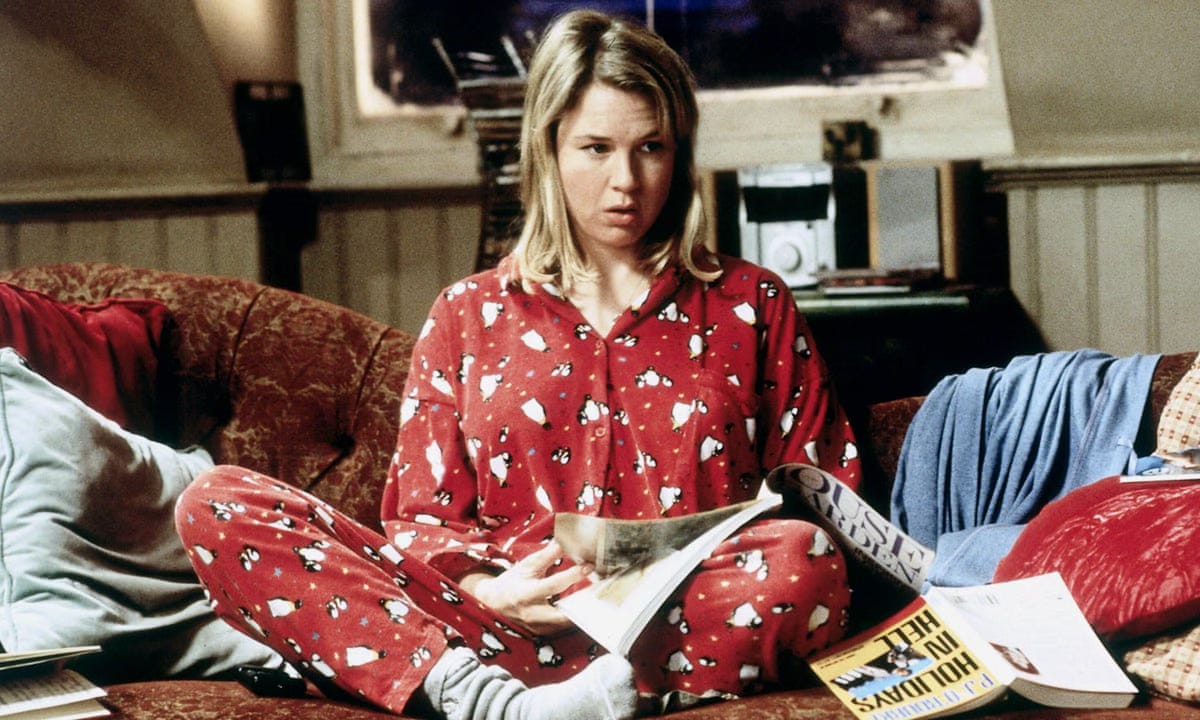
When Bridget Jones' Diary came out in 1996, one of the main takeaways for many young women reading the novel was that they should lose weight in order find love. This message was only further reinforced by the movie version in 2001, in which a 130-pound Renee Zellweger was somehow meant to represent an impossibly fat person. My main takeaway from Bridget Jones' Diary was that I should start writing a diary in order to find love.
Somehow, only 10 years later, I ended up marrying a British man who looked like the Temu version of Hugh Grant and was just as awful in real life as Hugh Grant’s character was in the movie. I can’t attribute this to keeping a diary, because diary-keeping didn’t last very long for me as a 16 year old. Writing just for oneself was deeply unsatisfying as a teenager. I mean, the whole point of Bridget Jones’ diary was that we all got to read it along with her. What good was it sharing your inner thoughts if no one responded to them? If no one laughed at your jokes? If no one said, “My god, I’ve felt that way too! It’s not just you!”
This is how I began blogging in the mid 2000s. There was a duality to blogging that was instantly attractive to me: Part of blogging was sharing your inner thoughts in a way that seemed one-sided at first, typing away and hitting “post” and sitting in silence with the words you’d just puffed away into the Internet ether. But soon, comments would start rolling in. People were reading your diary, and they were responding. Even if they didn’t comment, you could see the page views, the IP addresses, the people silently flipping your pages. A diary that wasn’t just for you.
In the mid 2000s, I was still a fairly recent college graduate. While I had a boyfriend during my junior year at Baylor, he wasn’t the first man I truly loved. That first true love was a guy I’d met in a world religions course who, it turned out, was in the honors program with me, and who also snickered at the other kids in class who asked questions like, “What’s a bibliography?” and “What’s a citation?”
“How did we get into the same school as these people?” he asked me one day as we were leaving class. It was a catnip question for a snobby 17-year-old English major like me. Only a few weeks into my freshman year, I already felt completely out of place at Baylor, and basking in a smug sense of superiority about my intelligence was the only raft I could grasp in a sea of beautiful blonde girls with wealthy parents and Lexus RXs and guaranteed sorority bids.
Tom (definitely not his real name) was tall and handsome and played soccer and could easily turn the heads of any one of those girls, but he was talking to me after class, walking with me to get lunch, emailing me about silly things that had happened that day, meeting me in the quad outside his dorm to shoot the shit on a picnic table on cold Waco winter evenings, shivering in our fleeces and beanies as we laughed late into the night.
What seemed to attract Tom to me was my ability to juggle joking around with ongoing discussions of more serious subjects: Matthew Shepard being beaten to death in Wyoming, our worries about the Y2K bug, the possible impeachment of President Bill Clinton following a report from Kenneth Starr, who would later become Baylor’s president — not the typical college talking points at our university, which was generally more concerned with matchmaking its coeds so they could pop out more Baptist babies at a nice, young, stupid age.
Tom and I spent endless hours together our freshman year talking, writing to each other, talking some more, writing some more. Seeing each other every day in class didn’t seem like enough time with each other. We were always reaching out, always communicating. The only problem: Tom had a girlfriend. By all accounts, a stupid girlfriend, one who had barely made it into a third-tier college a few hours away. I wondered how often Tom emailed her. I wondered what they talked about on the phone. I knew that when she came to visit him, or vice versa, they fucked like Baptist rabbits on a quest for a big, robust brood of bunnies. I knew this because he told me.
Tom wasn’t the first man who would only be attracted to my personality and he wouldn’t be the last. But he made the biggest impression for a very long time, probably because of how aesthetically out of my league he was. Mentally, we were in sync. Physically, we must have looked like Dean Martin and Jerry Lewis crossing campus together. When you’re a Jerry Lewis, there’s nothing more intoxicating than a Dean Martin wanting to keep you company. With Dean, you’re elevated to a duo, a pair, a whole larger than the sum of its parts. Without Dean, you’re a silly clown that only the French find amusing. And there were no French people in Waco.
It became clear after the first semester that Tom was using me for the female companionship he lacked with his girlfriend so many miles away. I realized this, and I didn’t care. Being even partly together was better than being alone. Tom would never want to lock himself into a hotel room with me for the weekend, but he wrote to me all the time, and that connection seemed far deeper. Between classes, I’d head to the communal computers in the student center to check my email; inevitably there was some missive in there from Tom. My poor heart swelled.
Writing back to Tom became more interesting than any of my classes. In our second semester, we weren’t sharing any courses, so emailing between lunches or dinners or late-night picnic table chats became a vital means of sharing our days. What clever thing could I say to keep him coming back? What could I write that would ensure another invitation to eat waffles together in the dorm cafeteria? Without Tom, I had no one to eat my meals with. When we didn’t eat together, I took my food to my room and ate alone.
Tom and I spent the summer keeping up our regular email habit, despite the fact that he and his girlfriend were back in their hometown together. By the time our sophomore year rolled around, they had broken up. I tried to show as little enthusiasm as possible at this news, not wanting to tip my hand. Maybe over time, Tom’s interest in my personality could blossom into an interest in me as a full human being. But I didn’t want to push my luck.
By the second semester of our sophomore year, I was fully smitten with Tom. If he was dating other girls, I didn’t know about it. I spent hours at Tom’s off-campus apartment with him and his roommate, watching old VHS tapes on a broken-down couch. Glory Daze was in heavy rotation, a movie about a disaffected college senior reluctantly graduating into a world even more confusing and chaotic than the one he was currently occupying at the University of California, Santa Cruz. It seemed like a preview of our own futures. Tom took magazines, which I found incredibly mature and worldly, and we’d read Harpers and Rolling Stone and The Atlantic side-by-side in comfortable silence on Sunday mornings when everyone else was in church.
One evening, after a full Sunday together — which, in Waco in 2000, meant a sack of cheeseburgers at Dubl-R for lunch followed by a long trip to the Wal-mart for your weekly essentials-slash-entertainment and a thrown-together dinner of Hamburger Helper made in your cheap college cookware — Tom decided he wanted to try frosting his tips with the boxed hair dye he’d bought earlier that day. We giggled as I threaded skinny bundles of hair through the holes of a cap that covered his head like a mad scientist wig.
Sitting on the toilet in his bathroom, Tom chattered away as I carefully painted the twigs of hair sprouting from the puffy cap. “Be still!” I told him. “You’re making me laugh!” He grinned. “What’s the worst that could happen?” he asked. “I’ll fuck this up and you’ll look ridiculous,” I said. The comfortable silence took over. Tom simply stared up at me, watching me work. I lacquered the last strands of hair and stood up straight to admire the finished product.
As soon as I had set the kitchen timer on his bathroom counter — 20 minutes for the hair dye to take hold — Tom grabbed me by the waist and brought me back towards him. Before I had a chance to understand what was happening, Tom was kissing me. It was too fast to be truly romantic — his frosted tips poking out of the cap, me straddling him on an old toilet in a shitty college apartment — but I remember thinking, Finally. Finally.
Making out quickly turned into Tom pulling down my jeans and panties and kneeling on the cold bathroom tile in front of me. He was the first guy who’d ever gone down on me. I finished just as the kitchen timer went off. We laughed at the perfect timing, my knees so weak I could barely stand to pull my pants back up. I told him to get in the shower and rinse out the hair dye, returning his favor on the couch when he emerged from the steamy bathroom. Soon, it was time for bed, and Tom had begun to recede. He made it clear he was tired and that he didn’t want me to stay. Still, I left with real hope in my heart for the first time in a very long time. I was too young and inexperienced to understand the signals of waning interest.
I never saw Tom again after that night. He stopped calling. He stopped emailing. If he was still on campus, he was making it a point to avoid me. I occasionally ran into his roommate, who refused to answer any of my questions about where Tom had gone or even how his frosted tips had turned out. I don’t blame the guy. I wondered if Tom had transferred to another school. I wondered if he developed a terminal illness. But in my heart I knew the truth: I’d flown too close to the sun. Tom made a mistake that night. And he knew that if he ever saw me again he’d have to explain the awful truth that everyone who’s ever ghosted anyone wants to avoid saying out loud: I don’t like you that way.
Just like you can’t unbreak a shattered glass, you can’t go back to being friends after something like that. You can’t pretend that one of you hasn’t broken the other one’s heart into pieces. You can’t keep on reading Harpers together on Sunday mornings or writing to each other 20 times a day as if you’d never seen each other naked. And so it goes.
One day, six years later, sitting in a cubicle at my second job out of college, I got a friend request on Facebook: Tom. I didn’t think it was possible to have your heart squeezed nearly to the point of breaking all over again after six whole years. Every feeling of abandonment and foolish hopefulness came flooding back like no time had passed at all. I ran to the bathroom and cried tears I thought were long dried up. Why now? Why after all these years? After I had nearly forgotten Tom existed?
By this time, I was fully immersed in repeating the pattern that had gotten me into so much trouble in college, obsessing over a handsome coworker, a former athlete who was already in a relationship. We emailed constantly. He was the Hugh Grant lookalike I’d eventually marry and then divorce within a year. Even if I hadn’t thought about Tom in years, his presence was there in the shadows of this dysfunction.
Tom looked roughly the same in the tiny Facebook photo on his profile as I remembered. I accepted his friend request against my better judgment and fell down a rabbit hole of catching up on his life. It turned out that he had transferred schools after all, which made sense — I hadn’t seen him at commencement, my last hope of having a single passing word with him before graduating, and his name wasn’t in the program. He had a beautiful blonde girlfriend and although his hairline had begun a slow retreat, Tom was as cheerfully good-looking as ever. He was living in Chicago; his photo albums showed nights out with friends in a soccer league and days working in a shiny skyscraper in the Loop.
My own Facebook photo albums showed a person who’d changed dramatically since college. It took leaving Baylor to find friends, but I did. Leaving behind the snobbishness and insecurities that plagued me in college had helped. My nights out were in Houston, not Chicago, and I worked in a pink granite building just outside the Loop, but it was a good life in spite of my romantic maladjustments. I lived in a cute garden apartment with a huge library wall of books and my own computer, where I pecked out stories at night that no one read — that I kept to myself, like an actual diary. It wasn’t the same as having someone read your words and respond to them, but it was the comfort I needed after a long day of working in human resources and essentially ruining people’s days for a living.
Tom’s friend request was as maddening as his sudden departure from my life. It didn’t come with any sort of message or indication as to why, after six years, he decided to broach my world again. I wasn’t about to be the first person to message him, either. And so we occupied an online limbo like this for a while.
Facebook was a different beast back then. Mark Zuckerberg had just opened it to people who weren’t still in college, yet still it attracted a roughly similar demographic: folks in their early-to-mid-20s who’d come of age on MySpace, where we posted angsty lyrics from our favorite songs as status updates and decorated our pages with glittery graphics that resembled an early-days Geocities website. Your parents weren’t on Facebook yet; your grandparents certainly weren’t. Facebook encouraged you to share your inner thoughts much like a diary did, except your people could read and respond to your tedious yearnings or provocations.
While I loved the growing audience of Facebook, where suddenly all of your friends (and your old college flings) were popping up, I missed the creativity of Myspace — the ability to personalize your pages, the HTML doodling, the online marginalia. Blogger had been growing since 2003, and by 2007 it had become an attractive proposition for someone who wanted to create an online diary unconstrained by Facebook’s narrow margins. So one day I found myself creating a blog. I began writing in it all the things I wanted to tell Tom about my life now, imagining him as my sole audience, as if our email correspondence had never ceased.
Every time I wrote a new blog post, I linked to it on Facebook. And then, out of the blue, after months, it happened: a message from Tom. “I always liked your writing. It’s been fun to read what you’ve been up to.”
Nothing more to it than that. No mention of his absence for the last six years, no reference to anything else. Before long, we picked up almost right where we left off, trading occasional emails about the looming mortgage crisis that was leading up to what we now know as the Great Recession, the Virginia Tech shooting, the final Harry Potter book. We didn’t share anything about our personal lives. I didn’t tell him that I’d once been in love with him or that he was the reason I hard a hard time trusting men. Instead I lived for the emails once again, especially the ones complimenting my writing. He was still reading after all this time. We were communicating again. It was all that mattered.
Blogger offered something else neither Facebook nor MySpace did, too: the ability to see how many people were visiting your page, and when, and for how long. Years later, my obsession with tracking page views would net me my first job at a local newspaper as their web editor. But for now, it finally gave me an idea of how many people were actually reading my online ramblings. And even on the days when Tom didn’t email me to tell me how much he’d liked a new blog post, I could see him reading: the one Illinois IP address in a sea of Texas addresses. I could see when he’d visited (sometimes during the day, sometimes late at night). And I could see for how long (often hours at a time spent hopping from post to post).
The more time Tom spent reading, the more time I spent writing. And the more time I spent writing, the more other people started reading it too. I could see them, just like I saw Tom. One day, at the height of the Great Recession, my pink granite office building was raided by FBI agents and men from the Securities and Exchange Commission asking for files that I knew had already been shredded. I jumped ship and took the first job that I could find, but by then I was completely uninterested in pursuing an HR career any further; writing was all that mattered.
I wrote at work, at home, at night, on the weekends with writing buddies I met online. Some of us started writing for a website called Houstonist, meeting up at a cafe called Brasil in Montrose to pitch stories to each other about the city we all lived in and often struggled to understand. Soon I wasn’t writing about my days at work or my random passing thoughts, but about Houston, about reckoning with something larger than yourself, about finding a community among millions and millions of people that somehow made the vast city seem like a village.
Tom’s emails became less frequent as his own life moved forward too. So did his visits, I’m assuming. But I’d reached a tipping point along the way without realizing it: I wasn’t writing for Tom anymore. I’d stopped looking for that Illinois IP address a long time ago. I’d stopped looking at page views altogether.
In 2008, the local paper asked me to start writing for them. Not long after that, they offered me a full-time job. Within a couple more years, I’d be ruining peoples’ days for a living in a very different capacity as the paper’s food critic. For the last 16 years, I’ve been a writer — an editor too, but mostly a writer. And I’ve loved it, even on the days when I hated it. I’ve watched the entire landscape of newspapers and magazines and blogs change in ways I couldn’t possibly have predicted, even as young writers like myself were often agents of that change. We can’t see the future. We can’t always see the ways in which we’re changing, the ways in which the world is changing around us, until we’re at a far away distance.
I used to think I needed to write in order to find love. I was just wrong about the love being a “who” instead of a “what.” Writing is what I love. Writing is where I feel whole and understood. Writing is an act of sacrifice and vulnerability. Writing allowed me to be seen, by myself and others. Were it not for writing, I don’t know that I would have ever healed enough from Tom, from the junior-year boyfriend who screamed in my face whenever he didn’t get his way, from the Hugh Grant lookalike who constantly called me fat (just like Bridget Jones!) and eventually left me for another coworker — from any number of wounds and bruises and gutting heartaches — to allow myself to find other true loves in my friends, my city, the other writers I’ve mentored or been mentored by, or my darling husband, who very rarely reads my writing at all and loves me in a deep and abiding way I never thought I’d be loved.
I used to think I needed to write in order to find love. I was right.